
"production conditions"
20000 article(s) found

Introduction to the planting base map of Brazilian coffee bean grade classification characteristics, flavor brand location conditions
Brazil Coffee Bean grading characteristics Flavor Brand location conditions planting Base Map Coffee production has gradually become a science since coffee trees were introduced from French Guiana (Guyana) in 1720. Before 1990, the Brazilian government carried out strict monitoring of the coffee industry, including strict intervention and price protection measures, and the state has been implementing minimum price protection measures for farmers.
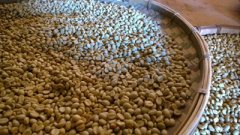
Growth conditions and excellent quality of Baoshan small Coffee the unique flavor of Baoshan small grain coffee
Small grains of coffee in Lujiang, Baoshan, Yunnan. National Geographic indication product is one of the better quality coffee in the country and the world, and its taste can be comparable to the world-famous Blue Mountain Coffee. Baoshan small-grain coffee is famous all over the world for its unique excellent quality: it was rated as first-class in the London market in the late 1950s and won the reputation of Lujiang No.1, at the National Coffee Conference in 1980.

What growth conditions are needed to grow coffee beans?
The latitude is between the north and south latitudes, that is, the temperature in the tropical and tropical areas is about 21 degrees Celsius, and the sunshine is only a few hours a day. The terrain is mainly located in the mid-levels of 300 to 400 meters, or on slopes of 1500 to 2500 meters. The higher the altitude, the higher the quality. Because the sunshine time is short and the drainage is good. Under the coffee bar like the root tide, high in the middle of the coffee bar, placed in the coffee bar.

Haitian boutique coffee Mare Blanche
The mention of Haiti has to remind people of the 2010 Haiti earthquake and the poverty and backwardness of the region, no one will remember Haitian coffee, because the local production conditions are extremely backward and the growth of coffee trees can only be achieved by the unique local climatic conditions, while Thio-tte Mare Blanche in southeastern Haiti has the unique climatic conditions for producing quality coffee.

The basic conditions for making good coffee
The amount of grinding powder is 6.5 milligram, the appropriate temperature is 1 g, the pressure of 90-95 degrees Celsius coffee machine is about 132 p.s.i. (9 + /-1 atm) the production time is 30 sec. The amount of coffee finished is about 0.7 fl. Oz. (30 hands hands 10 cc)
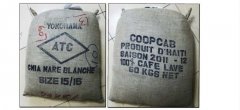
Boutique coffee beans Haitian boutique coffee Mare Blanche
The mention of Haiti has to remind people of the 2010 Haiti earthquake and the poverty and backwardness of the region, no one will remember Haitian coffee, because the local production conditions are extremely backward and the growth of coffee trees can only be achieved by the unique local climatic conditions, while Thio-tte Mare Blanche in southeastern Haiti has the unique climatic conditions for producing quality coffee. Mare
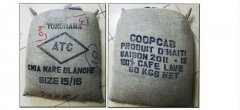
Haitian Fine Coffee Mare Blanche COOP CAB Coffee grower Cooperative
The mention of Haiti has to remind people of the 2010 Haiti earthquake and the poverty and backwardness of the region, no one will remember Haitian coffee, because the local production conditions are extremely backward and the growth of coffee trees can only be achieved by the unique local climatic conditions, while Thio-tte Mare Blanche in southeastern Haiti has the unique climatic conditions for producing quality coffee. Mare

The origin and planting conditions of coffee trees basic knowledge of coffee
The origin of the coffee tree is Ethiopia in Africa. In botany, coffee trees belong to the evergreen trees of the subgenus Rubiaceae, and coffee beans, commonly known as coffee beans, are the seeds of the fruit of coffee trees, just because they are shaped like beans, so they are called coffee beans. Climate is the decisive factor for coffee cultivation. Coffee trees are only suitable for growing in the tropics or subtropics, so latitude 25 is south and north.

A brief introduction to the History and Culture of the Origin and Development of Arabica Fine Coffee beans
Arabica? The planting conditions of coffee are harsh, requiring higher elevations (above 2000 meters above sea level), fertile soil fertility, adequate moisture, proper sunshine conditions and shade. Arabica? Coffee tree species have poor ability to resist diseases and insect pests and are easy to be damaged. In addition, the annual output of coffee trees per unit area is also lower. At the moment? Arabica? Grow coffee

What is the F1 hybrid that appears now? Will F1 coffee be more adaptable to the environment?
Professional coffee knowledge exchange more information about coffee beans Please pay attention to the changing weather patterns in coffee workshops (Wechat official account cafe_style). Diseases and insect pests, deforestation and rising temperatures are just some of the environmental factors that threaten global coffee production. It is estimated that by 2050, we may lose as much as 40% of our arable land to grow coffee, which makes today's coffee industry face the forefront.

Why do Ethiopian coffee beans have good quality? what conditions do high-quality coffee beans need?
The planting and growth of coffee trees need strict environmental requirements. Climate, altitude, soil, as well as the way coffee beans are picked and the process of production will affect the quality of coffee. First, the elevation of Ethiopia is mainly mountain plateau, most of which belong to the Ethiopian plateau. The central and western regions are the main body of the plateau, accounting for 2% of the whole territory. 3. The East African Rift Valley runs through the whole territory, with an average elevation.

Introduction to the producing area of Papua New Guinea Coffee grown under Natural conditions
The frost in 1975 destroyed most coffee crops in Brazil, but it affected the development of the coffee industry in Papua New Guinea. * * A scheme has been implemented to subsidize rural or collective landowners to create about 20 hectares of coffee plantations. This measure has indeed increased the penetration of coffee in the local economy, and by 1990, the annual output had reached 1 million bags. However, hardly ever.
What are the conditions for producing high-quality coffee? the coffee producing areas in that country are the best.
Coffee production in Guatemala has declined relatively, at 700kg per hectare, while that in El Salvador is 900kg per hectare and that in Costa Rica is even more astonishing, at 1700 kg per hectare. The export of dangerous Dimara coffee is controlled by private companies, but the National Coffee Council (Asociacion Nacional de Cafe) controls the coffee industry.

El Salvador Coffee Variety types El Salvador Coffee production conditions
Coffee (Xoffea arabica Linn) Coffee is a perennial evergreen shrub or small tree of Rubiaceae. It is a horticultural perennial cash crop with the characteristics of fast growth, high yield, high value and wide market. Wild coffee trees can grow to a height of 5 to 10 meters, but coffee trees planted on the manor are often cut to a height of less than 2 meters in order to increase the amount of fruit and facilitate harvesting.

The natural conditions of coffee cultivation Arabica requires high planting conditions in order to produce high quality.
Professional coffee knowledge exchange more coffee bean information please pay attention to the coffee workshop (Wechat official account cafe_style) front street-Arabica coffee planting conditions introduction the higher the elevation of coffee trees, coffee quality will be relatively good, such as Arabica beans are in the altitude of 1000-2000 meters above sea level, Robbosa beans are generally located in the plains below 800m

What conditions do you need to grow coffee? where is the coffee planting belt located and why is it suitable for coffee cultivation?
Professional coffee knowledge exchange more coffee bean information Please follow the coffee workshop (Wechat official account cafe_style) Front Street-Coffee growing Zone introduction if we want to understand what is a coffee belt, we first need to know the growth environment of coffee tree, which plays a decisive role in the life cycle of plants: water, air, soil and light. But for coffee tree,
Favorable conditions for coffee cultivation in Colombia Coffee cultivation in Colombia has a unique advantage
Professional coffee knowledge exchange more coffee bean information please follow the coffee workshop (Wechat official account cafe_style) front street-Columbia planting conditions South America is already the largest coffee-producing continent, thanks to the high altitude surrounded by the Andean foothills, where the climate is mild and humid, good rainfall makes it very suitable for coffee growth, making Columbia

Coffee common sense Italian espresso Espresso coffee production standard
First of all: what is the golden rule for making espresso? What is the gold content of the gold rule? The golden rule: the time it takes to make a standard cup of Italian coffee (25-30ml), that is, from the first drop of coffee to turning off the switch, should be 25-30 seconds. Since it is called the golden rule, no matter its importance, its function and correctness, it should be like gold.
Planting conditions of Coffee trees
The origin of the coffee tree is Ethiopia in Africa. In botany, coffee trees belong to the evergreen trees of the subgenus Rubiaceae, and coffee beans, commonly known as coffee beans, are actually the seeds of the fruit of coffee trees. They are called coffee beans only because they are shaped like beans. Climate is the decisive factor for coffee cultivation. Coffee trees are only suitable for growing in the tropics or subtropics, so latitude 25 degrees south and north.

What are the local conditions? How is coffee naturally affected by climate, soil, etc.?
We often hear the word "local conditions" when we talk about coffee, but what exactly does it mean? Does it have anything to do with the flavor of coffee? Why do we need to care about the local environment? The author interviewed some people in the coffee and wine industries and asked them to tell you what was going on in the country. What are the local conditions? The word vernacular conditions comes from the French Terroir, which is most commonly used when talking about wine.